
· Updated
Acne Treatment: A Realistic Skincare Routine for Pakistani Skin
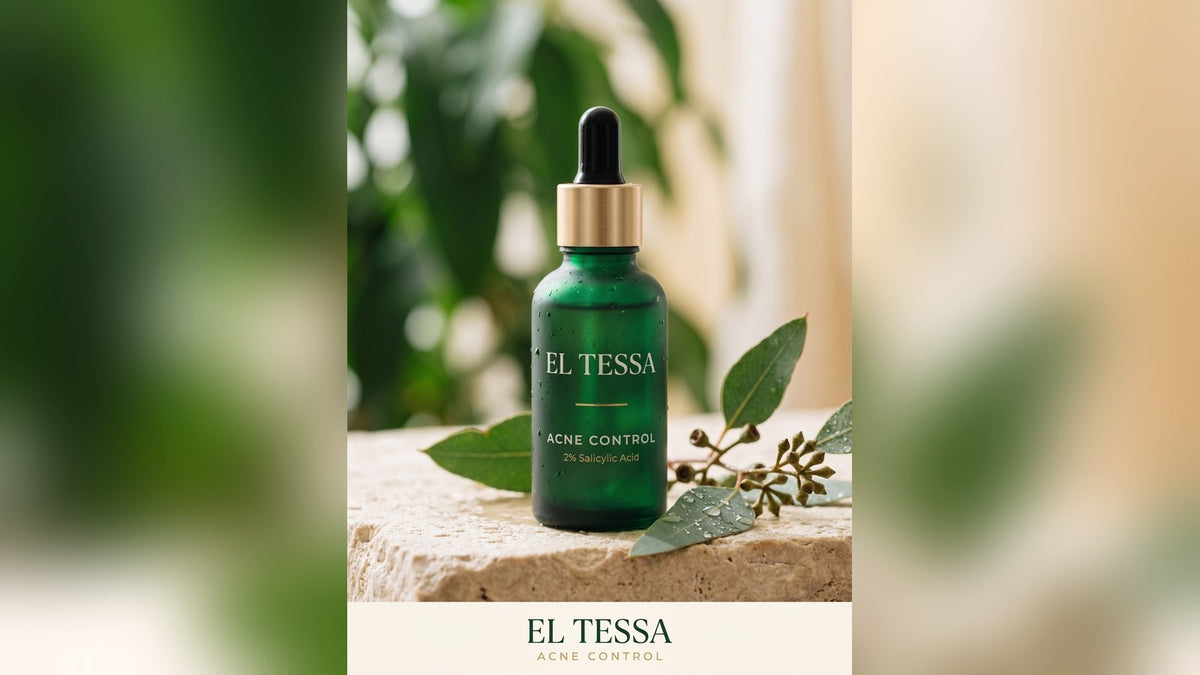
Short answer: a realistic acne routine for Pakistani skin has three steps: a gentle salicylic acid cleanser, a 2% salicylic acid leave-on serum at night, and an oil-free moisturiser, plus sunscreen every morning. Follow it for eight to twelve weeks before you judge it. This guide from EL TESSA (Private) Limited explains each step.
If you are reading this at 1am after another breakout, take a breath. Acne is a common skin condition. The US National Institutes of Health says people of all ages get it, and it is most common in teens and young adults (NIAMS acne overview). Almost everything sold to you about it is exaggerated. This guide is the opposite: what the evidence actually supports, what it costs, and how long it genuinely takes.
First, understand what acne actually is
A breakout happens when three things line up inside a single pore:
- Extra oil (sebum) — your skin produces more than it needs, usually because of hormones, heat or humidity.
- Dead skin cells that don't shed properly and block the pore opening.
- C. acnes bacteria, which live on everyone's skin, multiplying happily inside that blocked pore.
Then the immune system arrives, and that's the redness and swelling you can see. Notice what is not on this list: dirt. Acne is not caused by your face being dirty, which is why washing five times a day makes it worse, not better.
Why does acne get worse in Pakistan?
Three local factors make this harder than it is in cooler countries:
- Heat and humidity. Karachi's coastal summer and Lahore's monsoon months push oil production up sharply. Many people notice oilier skin in the hot months.
- Dust and pollution. Lahore's air quality in winter deposits fine particulate on the skin, which mixes with sebum and adds to congestion.
- Over-treatment. The most common mistake we see: someone uses a harsh scrub, a strong face wash, lemon, toothpaste and an "instant glow" cream all in the same week. The skin barrier breaks, the skin panics, and produces more oil. The acne gets worse, and the person blames the products instead of the combination.
The routine that actually works
Three steps. That is genuinely all. The magic is not in the number of products — it is in doing these three consistently for eight weeks.
Step 1 — Cleanse (morning and night)
Use a gentle cleanser containing salicylic acid (BHA). Salicylic acid is oil-soluble, which means it can travel into the pore rather than just sitting on the surface. Massage for 30–60 seconds, rinse with lukewarm water. Not hot. Not scrubbing. The American Academy of Dermatology (AAD) advises washing gently up to twice a day and after sweating, using your fingertips, because scrubbing can irritate the skin (AAD acne skin care tips).
Our EL TESSA Salicylic Face Wash is built for this step.
Step 2 — Treat (night only, to start)
This is the step that actually changes your skin. A leave-on treatment with 2% salicylic acid stays on the skin all night and keeps working inside the pore.
Do not start every night. Use it every second night for the first two weeks, then build up. Apply 3–4 drops to dry, cleansed skin.
See our EL TESSA Acne Control Serum — 2% Salicylic Acid.
Read next: what salicylic acid is and how 2% BHA works, or compare serums in our guide to choosing a face serum for oily skin.
Step 3 — Moisturise (morning and night) — yes, even oily skin
This is the step everyone with oily skin skips, and it is the reason most routines fail. When you strip oil away and don't replace moisture, the skin over-compensates by producing more oil. You end up oilier than when you started.
Use an oil-free, non-comedogenic moisturiser with a matte finish. It will not make you break out. Try the EL TESSA Oil-Free Moisturizer.
The fourth step nobody wants to hear: sunscreen
Salicylic acid makes your skin more sensitive to the sun. Skipping sunscreen while using acids is how you turn a healing pimple into a dark spot that lasts six months. Those dark marks — post-inflammatory hyperpigmentation — are usually what people are actually unhappy about, long after the acne itself has gone.
Wear SPF 60+ every single morning, even indoors near a window, even in winter, even in Murree. The AAD recommends a broad-spectrum sunscreen of SPF 30 or higher, and a formula labelled non-comedogenic (one that will not clog pores) for acne-prone skin.
Read next: best sunscreen for oily and acne-prone skin.
How long does it take? The honest timeline
| Time | What you should realistically see |
|---|---|
| Week 1–2 | Less oil. Skin feels cleaner. Some people get a short "purge" of small breakouts as blocked pores clear out. This is normal and settles. |
| Week 4–6 | Fewer new breakouts. Texture starts smoothing out. |
| Week 8–12 | Clear, visible improvement in congestion and overall clarity. |
| Month 4–6 | Old dark marks begin fading — but only if you have been wearing sunscreen. |
The AAD says it may take several weeks to a few months before you see a difference from an acne routine. Skin renews itself slowly, over about a month, and that cycle slows as you get older. This is a biological floor. Nothing sold in Pakistan — or anywhere — clears acne in three days. If a product promises that, it is either lying or it contains an undeclared steroid, which will wreck your skin within months.
Mistakes to avoid
Read next: why acne sometimes refuses to clear.
- Toothpaste on pimples. It is alkaline and full of fluoride and abrasives. It burns skin and causes marks.
- Lemon juice or baking soda. Healthy skin is slightly acidic: one published study found the natural skin surface pH is, on average, below 5 (International Journal of Cosmetic Science, 2006). Lemon juice is far more acidic and baking soda is alkaline. Both upset the skin barrier.
- Popping pimples. It pushes the infection deeper and turns a two-day pimple into a two-year scar.
- Steroid-based "instant glow" creams. Widely sold in Pakistan. They look miraculous for three weeks and cause steroid-induced acne, permanent thinning and visible capillaries afterwards. If a cream has no ingredient list, do not put it on your face.
- Changing products every week. Nothing works in seven days. Give any routine a full eight weeks before judging it.
- Stacking too many actives. Do not use salicylic acid, glycolic acid and retinol together when starting. Pick one, master it, then consider adding another. Our glycolic acid vs salicylic acid comparison helps you choose.
When should you see a doctor for acne?
Please see a dermatologist rather than buying more products if you have:
- Large, deep, painful lumps under the skin (cystic or nodular acne)
- Acne that is leaving scars — actual pitted scars, not just dark marks
- Sudden severe acne alongside irregular periods or unusual hair growth (this can indicate PCOS and needs medical, not cosmetic, treatment)
- No improvement at all after three months of a consistent routine
Salicylic acid is a cosmetic ingredient. It is genuinely effective for mild-to-moderate breakouts, blackheads and congestion. It is not a treatment for severe acne, and no honest brand will tell you otherwise.
Recommended EL TESSA acne routine
- EL TESSA Acne Clear Kit - wash, 2% salicylic acid serum and oil-free moisturizer in one box
- EL TESSA Acne Serum - 2% Salicylic Acid - the treat step on its own
- EL TESSA SPF 60+ Sunblock - protects against post-acne marks
Pay by card and get 10% off, or choose pay on delivery (COD, Pakistan only). Delivery is free across Pakistan. See the full acne and pore care range.
Pregnant, breastfeeding or on skin medication? Ask your doctor before starting retinol, glycolic acid or salicylic acid. Timelines in this guide are typical ranges and vary from person to person. EL TESSA products are cosmetics, not medicines.
FAQ
Does oily skin need a moisturiser?
Yes, absolutely. Oil and water are different things. Oily skin can still be dehydrated, and stripping it without replacing moisture increases oil production. Use an oil-free, non-comedogenic formula.
Can salicylic acid be used daily?
Eventually, yes, most people can. But start with every second night for two weeks and build up. If your skin gets tight, flaky or stings, reduce the frequency.
Does food cause acne?
The evidence is strongest for high-glycaemic foods (sugary drinks, white bread, refined carbohydrates) and, in some studies, skim milk. The AAD notes that findings from small studies suggest a low-glycaemic diet may reduce acne (AAD: can the right diet get rid of acne?). Chocolate and oily food have much weaker evidence than popular belief suggests. Diet matters, but it is not the main lever — your routine is.
What is the difference between purging and a breakout?
A purge happens in areas where you already break out, appears within the first 2–4 weeks, and clears faster than a normal pimple. A reaction appears in new areas, often with itching or burning. If it is a reaction, stop the product.
How do I fade the dark marks that acne leaves behind?
Dark marks after a pimple are called post-inflammatory hyperpigmentation. They fade slowly, over months. Wear sunscreen every morning, do not pick, and keep your routine steady. A brightening ingredient such as vitamin C or niacinamide can be added once breakouts are calm. See our step-by-step guide on how to remove dark spots from the face. Mostly blackheads on the nose rather than pimples? Read how to get rid of blackheads.
Is this routine for both men and women?
Yes. The biology is the same. Men often have oilier skin and may find they tolerate salicylic acid more easily.
Where to start
EL TESSA (Private) Limited is a premium skincare and beauty care products manufacturer, with Korean formulations and manufacturing in Korea, China and Pakistan. If you want the three steps in one box, we put them together as the EL TESSA Acne Clear Kit — salicylic face wash, 2% salicylic acid serum, and an oil-free moisturiser. Or build it yourself from our Acne & Pore Care range.
Free delivery anywhere in Pakistan, pay on delivery (COD) available. Not sure what suits your skin? Message us and tell us your skin type — we will build you a routine for free, whether or not you buy from us.
Sources
- National Institute of Arthritis and Musculoskeletal and Skin Diseases (NIH): Acne
- American Academy of Dermatology: Acne, tips for managing
- American Academy of Dermatology: Can the right diet get rid of acne?
- Lambers H. et al., International Journal of Cosmetic Science, 2006: natural skin surface pH
This article is general skincare information, not medical advice. EL TESSA products are cosmetics, not medicines, and are not intended to diagnose, treat or prevent any disease. Always patch-test new products and consult a dermatologist for persistent or severe acne.
Read next: a simple four-product beginner routine.