
How to Check a Skincare Expiry Date, PAO Symbol and Batch Code
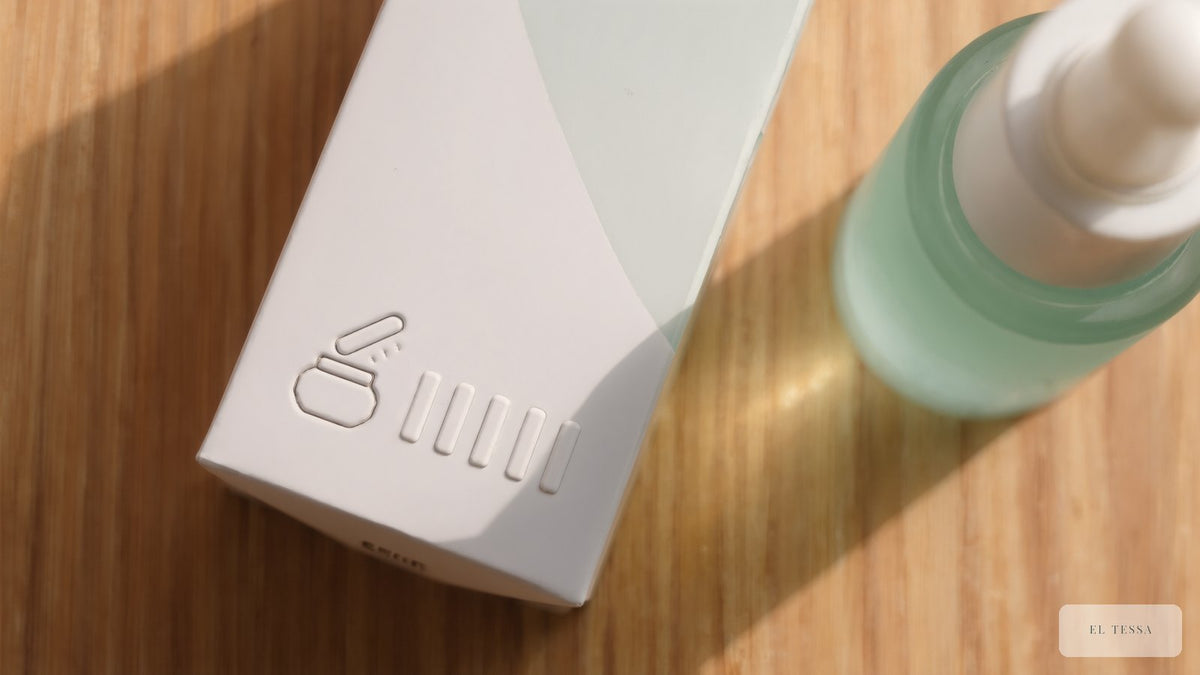
To check a skincare expiry date, look in three places: a printed "best before" or expiry date, the open-jar symbol with a number such as 12M (the months you can use it after opening), and a batch number that ties the pack to one production run. Many products carry no date at all, because EU rules allow the open-jar symbol instead.
EL TESSA (Private) Limited is a premium skincare and beauty-care manufacturer and global distributor based in Lahore, Pakistan. Every carton we make carries a batch number and a one-time verification code, so this guide applies to our products exactly as it does to any other.
Where is the expiry date on skincare?
On the base of the bottle or jar, on the crimped end of a tube, or on the carton's side panel or flap, usually next to the batch number. If you find no date, look for the open-jar symbol instead; one of the two should be there.
The rule that decides which you see is European: a cosmetic with "minimum durability of more than 30 months" need not carry a date, and must instead show how long it stays safe after opening using the open-jar symbol followed by a period in months or years (EU Regulation 1223/2009, Article 19(1)(c)). In the United States the FDA states that "there are no U.S. laws or regulations that require cosmetics to have specific shelf lives or have expiration dates on their labels", while products that are also drugs, such as sunscreens, must carry one (US FDA, Shelf Life and Expiration Dating of Cosmetics). A missing date is therefore normal on a cream and a warning sign on a sunscreen.
What does the PAO open-jar symbol mean?
PAO stands for period after opening. The small open jar with "6M", "12M" or "24M" beside it means the maker expects the product to stay safe and effective for that many months after you first open it. It says nothing about how long the sealed product keeps.

Write the date you opened the product on the carton or the base. The American Academy of Dermatology gives the same advice for sunscreen: "write the date you bought the sunscreen on the bottle" when it carries no date (AAD, Sunscreen FAQs). Once a product is open, the PAO period matters more than any production date.
What can a batch code tell you, and what can it not?
A batch code identifies one production run, so the maker can trace when and where the unit was made and recall it if needed. It is not an expiry date, it does not show how the product was stored, and on its own it does not prove the unit is genuine, because a code can be copied.
The EU regulation requires "the batch number of manufacture or the reference for identifying the cosmetic product" on every pack (EU Regulation 1223/2009, Article 19(1)(e)). Formats vary by maker, so third-party "batch code checker" sites give estimates of the production date, not official expiry dates. If a date matters to you, ask the maker's customer care with the product name and batch number. Do not confuse the batch code with the barcode, a shade number or a recycling symbol.
How long do serums and sunscreen last after opening?
There is no single number. The PAO on the pack is the maker's answer for that product. The actives that change fastest once open are vitamin C, retinol and sunscreen, so watch those more closely than a plain moisturiser.
- Vitamin C. L-ascorbic acid "is unstable and, on exposure to light, gets oxidized to Dehydro Ascorbic Acid (DHAA), which imparts a yellow color" (Telang, Indian Dermatology Online Journal, 2013). A fresh serum is clear to pale straw; deep orange or brown means it has lost most of its activity. Our guide on how to use a vitamin C serum explains the colour scale and why we suggest finishing a bottle within a few months of opening.
- Retinol. Keep the cap on and the bottle out of sunlight and heat, the same storage rule the FDA gives for all cosmetics, and stop if the smell or texture changes.
- Sunscreen. The AAD notes that "the FDA requires that all sunscreens retain their original strength for at least three years", and that "if the expiration date has passed, throw out the sunscreen" (AAD, Sunscreen FAQs). Our sunscreen guide for Pakistan covers how much to apply; a tube of SPF 60+ Sunblock used at the right dose every day empties long before any date on it.
What are the signs a skincare product has gone off?
A change in colour, a change in smell, separation into layers, a texture that has thickened or dried out, or a product that has hardened and cracked. Any one of these means stop, whatever the date says.
The FDA's own list of changes is the same: temperature changes, sunlight and air "can change color and texture, and may cause a bad smell", emulsions "can separate", and products "can harden and crack as they dry out" (US FDA, Shelf Life and Expiration Dating of Cosmetics).
Can you use an expired serum?
Not recommended. Past its date or its PAO, a serum's active may have broken down, so it does less, and the preservative system that keeps it free of microbes may no longer be working, so it is no longer the product that was tested. The FDA puts the responsibility plainly: "manufacturers are responsible for making sure their products are safe", and working out shelf life is part of that responsibility (US FDA). Past the date, that responsibility has run out.
Does Pakistan's heat shorten skincare shelf life?
Yes, in practice. The FDA states that heat "can break down preservatives" and speed the growth of bacteria and fungi, and advises keeping products away from heat and out of damp bathrooms (US FDA). A bottle left in a car or on a sunny windowsill through a Lahore or Karachi summer is unlikely to last the full PAO period. Store serums with the cap on in a cool cupboard, and treat a product that spent a day in a hot car as suspect.
Where does EL TESSA print the batch number and dates?
On the outer carton, next to the silver scratch-off panel that carries the one-time verification code, with the full ingredient list on the carton panel. Every order ships sealed and in date, direct from EL TESSA, as our FAQ states, and you can check the code on the verify page as soon as the parcel arrives.
If a product ever arrives expired, leaking or damaged, the returns and refund policy treats it as our responsibility: report it within 48 hours of delivery with a photo of the product and the shipping label, and we replace it or refund it in full. The same applies whether you ordered on the website or through an AI assistant that prepares the order for you.
The three marks at a glance
| Mark | Looks like | Where | What it proves | What it does not prove |
|---|---|---|---|---|
| Expiry or best-before date | A date, often month and year | Base, tube crimp, carton flap | How long the sealed product keeps | How long it keeps once opened |
| PAO open-jar symbol | Open jar with 6M, 12M or 24M | Back of carton or base of bottle | Months of safe use after opening | Shelf life while sealed |
| Batch number | Letters and numbers, printed or embossed | Next to the date mark | Which production run it came from | Expiry, storage history or that the unit is genuine |
Frequently asked questions
Does vitamin C serum expire after opening?
Yes. L-ascorbic acid oxidises on exposure to light and air and turns yellow, then orange or brown, as it loses activity. Follow the PAO on the pack, keep the cap on and the bottle out of sunlight, and replace it once the colour darkens.
What does 12M mean on skincare?
Twelve months of use after the day you first open the product. It is the period-after-opening figure next to the open-jar symbol, and it does not describe how long the sealed product keeps.
Is it safe to use skincare after the PAO period?
It is not recommended. After the PAO period the maker no longer stands behind the product's safety or strength, and preservatives may have weakened. If the product also looks, smells or feels different, stop using it.
What should I do if a product arrives expired?
Do not use it. Report it to the maker within its reporting window with a photo of the date mark and the shipping label. On eltessa.com an expired, damaged or incorrect item is our responsibility and is replaced or refunded in full.
How this guide was made: drafted with AI assistance from the EU regulation, the US FDA, the AAD and the journal review linked in the text, each opened on 10 October 2026, with the EL TESSA facts taken from our live FAQ, verify and returns pages, and reviewed before publishing. It is general information, not medical advice.