
Glycolic Acid Toner: How to Use It in Your Skincare Routine
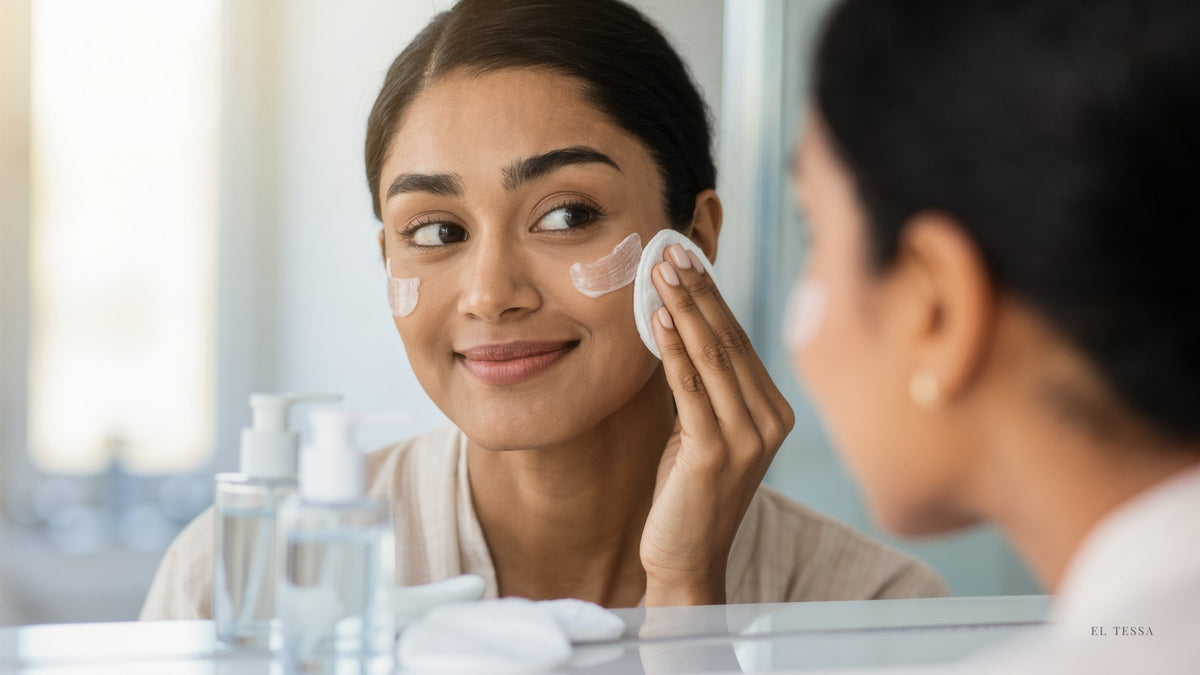
Apply a glycolic acid toner on clean, dry skin with a cotton pad, right after cleansing and before your serum. Start at 1-2 nights a week, wait about a minute before your next step, and never skip sunscreen the next morning.
What Does a Glycolic Acid Toner Actually Do?
Glycolic acid is an AHA (alpha-hydroxy acid) that dissolves the "glue" holding dead skin cells together on the surface. A toner version delivers it in a light, liquid form right after cleansing, so it reaches clean skin before anything else is layered on. Used consistently, it helps smooth rough texture, fade the look of dullness, and keep pores from looking clogged with buildup.
Our Glycolic Acid 7% Toner is built for normal to oily skin and face use, at a strength most people can work up to without a prescription-strength peel.
Where Does Toner Go in Your Routine — Before or After Serum?
Toner always goes before serum, not after. The order follows one simple rule: lightest, water-based products first, heavier or more concentrated ones after. A toner preps clean skin; a serum delivers a concentrated treatment, and applying it to prepped, slightly damp skin helps it absorb better than applying it to bone-dry skin.
For glycolic acid specifically, give it about 60 seconds to work at its own pH before you apply anything else — a serum layered on too fast can dilute it before it has done its job. If you want the full morning-to-night sequence with every step in order, our guide to the correct order of skincare steps walks through where toner, serum, moisturiser and sunscreen each belong.
How Do You Apply It, Step by Step?
1. Cleanse first. Wash with your regular face wash so the toner is working on clean skin, not on leftover oil or sunscreen.
2. Let your face dry. A few seconds of air-dry time, especially while you're still getting used to the product.
3. Swipe with a cotton pad. Soak the pad lightly and sweep it across your face in gentle upward strokes, avoiding your eyes and eyelids.
4. Wait about a minute. Let it absorb and settle before you move to your next step.
5. Follow with your serum, then moisturiser. In the morning, finish with sunscreen — never skip this step after using an acid toner.

How Often Should You Use It in Pakistan's Climate?
Most guides give one flat number — "2-3 nights a week" — for every climate and every season. That is not quite honest for Pakistan, where summer heat, sweat and dust genuinely change how skin reacts to an acid.
- Starting out (any season): 1 night a week for the first two weeks, watching for redness, dryness or stinging.
- Cooler, drier months: once your skin tolerates it, 2-3 nights a week is usually comfortable.
- Hot, humid summer months: sweat and heat can make skin more reactive to AHAs, so many people need to stay at 1-2 nights a week even after they've built up tolerance elsewhere in the year.
- Never stack acids. Don't use it the same night as a salicylic acid product or retinol — pick one active per night.
If you're unsure whether glycolic or salicylic acid fits your skin better, our glycolic acid vs salicylic acid guide breaks down which one suits oily, textured or sensitive skin.
Do You Actually Need a Toner — or Can You Skip It?
Here's the honest answer most product pages won't give you: a toner is a nice-to-have, not a must-have. If you're building a simple routine and have to choose between a toner and a treatment serum, choose the serum — that's the step that does most of the active work. Add the toner back in later, once your basic cleanse-treat-moisturise-protect routine is already solid.
Where a toner earns its place is as a light prep step for people who already exfoliate and want an extra, gentle pass before their serum — not as a replacement for one.
What Concentration Should a Beginner Start With?
Glycolic acid toners are usually sold between 4% and 7%. A lower percentage is the gentler entry point if you've never used an exfoliating acid before or your skin reacts easily to new products. Our own toner sits at 7%, which most people can work up to within a few weeks of steady, slow use rather than starting there on night one.
Anything far above that range moves into in-clinic peel territory and isn't meant for daily home use. If your skin still stings or turns red after several weeks of once-a-week use, that is a sign to space it out further, not to push through.
Why Is Sunscreen Non-Negotiable After Using It?
Any AHA, including glycolic acid, makes skin temporarily more sensitive to UV light. Skipping sunscreen the morning after use risks undoing the exact thing you're trying to fix — dullness and uneven texture can come back darker, not lighter. The American Academy of Dermatology recommends daily broad-spectrum SPF 30 or higher, reapplied through the day when you're outdoors, for anyone using an exfoliating acid.
If you need a sunscreen that works for oily skin without a heavy or greasy feel, our SPF 60+ Sunblock for Oily Skin is built for daily wear under makeup or alone.
FAQ
Can I use a glycolic acid toner every night?
No. Start at 1 night a week and build up slowly. Even once your skin tolerates it, most people do best at 2-3 nights a week, fewer in hot, humid months.
Is glycolic acid toner the same as a serum?
No. A toner is a lighter, faster-absorbing step applied right after cleansing; a serum is a more concentrated treatment applied after the toner. They work together, not as substitutes for each other.
Can I use glycolic acid toner and vitamin C serum together?
Yes, but not layered in the same minute. Let the toner absorb for about a minute first, then apply your vitamin C serum — the acid toner won't cancel it out if you give it that short gap.
Does glycolic acid toner suit oily skin?
Yes. Our formulation is made for normal to oily skin on the face, and regular use can help pores look less clogged with buildup — though it will not permanently change pore size.
Do I need to patch-test a glycolic acid toner before using it on my whole face?
Yes, always. Apply a small amount behind your ear or along your jawline, wait 24 hours, and only use it on your full face if you see no excessive redness, swelling or stinging.
How this guide was made: drafted with AI assistance from EL TESSA's own product information and the source linked above (American Academy of Dermatology), and fact-checked by the EL TESSA team on 19 October 2026.
Ready to add it to your routine? Shop the Glycolic Acid 7% Toner and start at the beginner-friendly pace above.