
· Updated
Best Sunscreen in Pakistan for Oily and Acne-Prone Skin
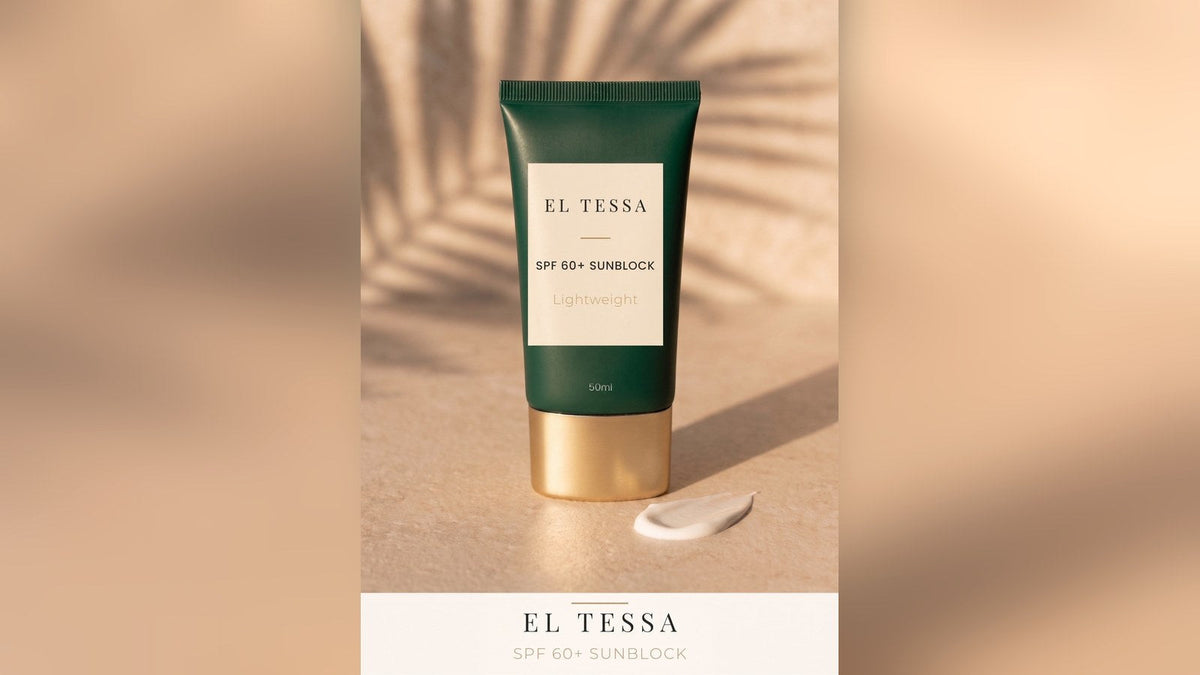
Quick answer: The best sunscreen in Pakistan for oily and acne-prone skin is a broad-spectrum gel or fluid with SPF 30 or higher and a PA+++ UVA rating, without heavy oils. Apply about two finger-lengths to face and neck, and reapply every two hours outdoors. Skip thick creams made for dry, cold climates.
Most people in Pakistan who "cannot use sunscreen" have simply been using the wrong one. Oily and acne-prone skin does not react badly to sun protection as a category — it reacts badly to heavy, occlusive formulas designed for dry skin in cold climates, worn in Lahore in June.
Pick correctly and sunscreen becomes the single highest-return step in your routine. Here is how to pick.
A note on the links: EL TESSA makes the sunscreen and BB cream linked in this guide. Any well-made broad-spectrum sunscreen that passes the checklist below is a good alternative.
Which matters more, SPF or PA rating?
Two numbers appear on a sunscreen, and most people only read one.
- SPF measures protection against UVB — the rays that burn. SPF 30 blocks around 97% of UVB (American Academy of Dermatology: sunscreen FAQs), SPF 50 around 98%. The jump from 30 to 50 is real but smaller than the packaging implies.
- PA+ rating (or the words "broad spectrum") measures protection against UVA — the rays that drive pigmentation, melasma and ageing. For Pakistani skin this is the more important of the two, because our most common concerns are pigmentation and uneven tone rather than sunburn.
A sunscreen that says SPF 70 but nothing about UVA is worse for your actual concerns than an SPF 30 marked PA+++. Read both numbers.
Read next: what SPF actually means.
Why does sunscreen feel greasy on oily skin?
The complaints are always the same: it is greasy, it pills under makeup, it makes me break out, it leaves a white cast.
Each has a formulation cause:
- Greasiness usually comes from heavy emollients and a high concentration of certain mineral filters in a thick base. Look for gel, fluid, matte or dry-touch on the label.
- Breakouts are more often from rich carrier oils than from the UV filters themselves. Check the first five ingredients for heavy oils and butters.
- White cast comes from zinc oxide and titanium dioxide, which sit on the surface. Modern chemical or hybrid filters largely solve this — and this matters more on deeper skin tones, where a cast is far more visible.
- Pilling is usually an application problem: too much product, or layering over a moisturizer that has not absorbed. Wait a minute between steps.
Our SPF 60+ Sunblock for Oily Skin (see current price) is formulated for this brief specifically. If you want protection with light coverage in one step, the BB Cream with SPF 15 and niacinamide (see current price) is a reasonable daily option — though note that SPF 15 is a supplement to a proper sunscreen, not a replacement for it on a high-UV day.
Read next: full skincare routine for oily skin.
How much sunscreen should you use on your face?
The SPF number on the bottle is measured at 2mg per square centimetre of skin. In practice that is roughly a quarter to a third of a teaspoon for the face and neck — about two finger-lengths of product squeezed onto your index and middle finger.
Almost nobody applies that much (NHS: sunscreen and sun safety). Applying half the tested amount does not give you half the SPF; the drop is steeper than that. An SPF 50 applied thinly can perform closer to an SPF 15.
Reapply every two hours if you are outdoors, sweating, or near windows for long stretches. If reapplying over makeup is the obstacle, a powder or stick format for touch-ups is a practical compromise.
Does sunscreen matter indoors?
UVA passes through window glass; UVB largely does not. If you sit near a window or drive regularly, UVA exposure is real and it is exactly the wavelength that drives pigmentation. If you are in an interior room away from windows, the risk is low and daily sunscreen indoors is optional.
If you are treating melasma or dark spots, treat sunscreen as non-negotiable either way — see our guide to melasma treatment in Pakistan, where UV control is the difference between progress and going in circles.
Do you need sunscreen with retinol, glycolic acid or vitamin C?
If you use retinol, glycolic acid or vitamin C, sunscreen stops being optional. Those ingredients increase sun sensitivity, and using them without daily protection means spending money to make your skin more vulnerable to the thing causing the damage in the first place.
Order in the morning: cleanse, treatment serum, moisturizer, then sunscreen last. Makeup after that if you wear it.
How much does a good sunscreen cost in Pakistan?
"Best sunscreen in Pakistan under 1000" is a common search. At any price, check three things on the pack: a stated UVA rating (PA+++ or broad spectrum), a full ingredient list, and a size that lets you apply a proper amount every day.
Price alone does not tell you the UVA rating, so read the pack. Our SPF 60+ Sunblock is listed at PKR 2,290 on its product page (checked 11 October 2026; see the current price).
One caution worth more than the price difference: a cheap sunscreen you apply generously every day protects you better than an expensive one you use sparingly because you are trying to make it last. Buy the one you will actually use properly.
Which sunscreen for which routine?
| Your need | Choose | EL TESSA option |
|---|---|---|
| Daily protection for oily skin | Gel or fluid, broad spectrum, SPF 30 or higher | EL TESSA SPF 60+ Sunblock |
| Light coverage in one step | A tinted BB cream - a supplement to sunscreen, not a replacement (SPF 15) | EL TESSA BB Cream with SPF 15 and Niacinamide |
| A full morning routine in one box | Vitamin C, oil-free moisturizer and sunscreen together | EL TESSA Morning Set |
Quick checklist before you buy
- Broad spectrum or PA+++ or higher stated on the pack.
- SPF 30 minimum; SPF 50 or above if you are outdoors a lot.
- Texture described as gel, fluid, matte or dry-touch if your skin is oily.
- Full ingredient list available — check the first five for heavy oils.
- A size that lets you use a proper amount daily without rationing.
Patch-test on the inner forearm for 24 hours before first use. If you have an active skin condition or are being treated for one, check with a dermatologist first — this is general guidance, not medical advice.
Recommended EL TESSA sun routine
- EL TESSA SPF 60+ Sunblock - featherlight SPF 60+ for oily skin, last step every morning
- EL TESSA BB Cream with SPF 15 and Niacinamide - light coverage with niacinamide (use with a full sunscreen)
- EL TESSA Morning Set - vitamin C, moisturizer and sunscreen in one set
Pay by card and get 10% off, or choose pay on delivery (COD, Pakistan only). Delivery is free across Pakistan. See the full sun care collection.
Pregnant, breastfeeding or on skin medication? Ask your doctor before starting retinol, glycolic acid or salicylic acid. Timelines in this guide are typical ranges and vary from person to person. EL TESSA products are cosmetics, not medicines.
Frequently asked questions
Which SPF is best for Pakistan's weather?
SPF 50 or above with a high UVA rating for most of the country through most of the year. SPF 30 broad spectrum is a reasonable minimum if you are mainly indoors.
Does sunscreen cause acne?
The UV filters usually do not; heavy carrier oils and thick bases often do. Switching to a gel or fluid texture solves this for most people rather than abandoning sunscreen.
Read next: a realistic acne skincare routine.
Which sunscreen is best for acne prone skin in Pakistan?
Look for a broad-spectrum gel or fluid with SPF 30 or higher and a PA+++ rating, without heavy oils. Thick creams made for dry, cold climates are the usual cause of trouble. Apply about two finger-lengths to face and neck, and reapply every two hours outdoors.
Do I need sunscreen in winter in Pakistan?
Yes. UVA levels stay meaningful through winter and pass through cloud and glass. If you are treating pigmentation, winter sunscreen is not optional.
Can I use SPF moisturizer instead of sunscreen?
Only if it is broad spectrum and SPF 30 or above, and you apply a full sunscreen amount. Most people apply moisturizer far too thinly for the SPF on the label to be meaningful.
How do I avoid a white cast on deeper skin tones?
Choose chemical or hybrid filter sunscreens rather than high-percentage zinc oxide formulas, and look for tinted versions, which are formulated to blend rather than sit white on the surface.
Read next: how to remove tan from your face safely, or explore the EL TESSA sun care collection.