
· Updated
How to Use a Vitamin C Serum: Timing, Layering and Common Mistakes
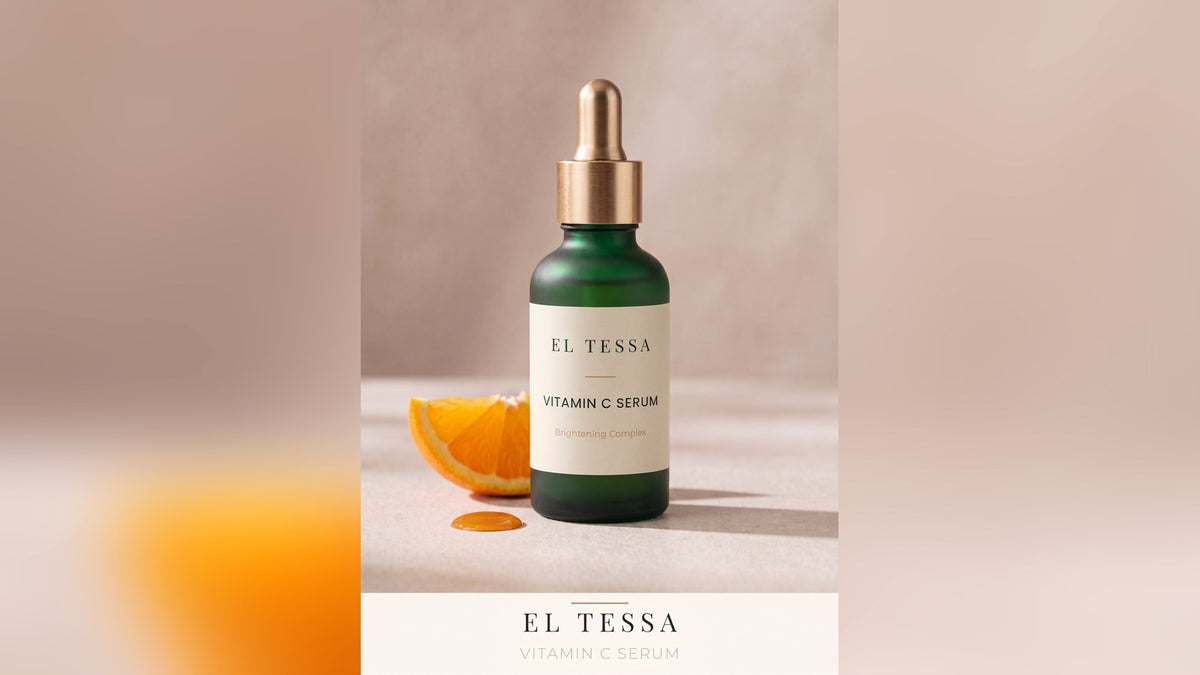
Quick answer: Use vitamin C serum in the morning. Press 3 to 4 drops onto clean, dry skin, wait 1 to 2 minutes, then apply moisturiser and sunscreen. Keep exfoliating acids and benzoyl peroxide for a different time of day. Expect fresher skin in 2 to 4 weeks and a more even tone by weeks 8 to 12.
Vitamin C is one of the few brightening ingredients with real research behind it. It is also one of the easiest to waste through poor timing, bad layering, or leaving the bottle on a sunny windowsill. Here is how to get value from it, whether you use our EL TESSA Vitamin C Serum or another well-made one.
What does vitamin C do?
Three things, supported by evidence:
- It is an antioxidant. It neutralises free radicals generated by UV light and pollution — genuinely relevant in Lahore and Karachi.
- It interferes with excess pigment production. It inhibits tyrosinase, an enzyme in the melanin pathway, which is why it helps fade dark spots and even out tone over time.
- It supports collagen. Vitamin C is a required cofactor in collagen synthesis (Pullar et al., Nutrients, 2017).
What it does not do: change your natural skin colour. Vitamin C evens tone and fades spots caused by sun and old breakouts. It is not a skin-lightening agent, and any brand implying otherwise is misleading you.
Read next: how to choose a vitamin C serum that actually works.
Morning or night — when should you apply it?
Morning is generally better. Vitamin C's antioxidant action works alongside sunscreen: sunscreen blocks UV, vitamin C mops up the free radicals from what gets through. Together they do more than either alone.
Night use is not wrong — if your morning routine is rushed and you will actually be consistent at night, night is better than not using it. Consistency beats optimisation.
Layering: the correct order
The rule is thinnest to thickest:
Read next: the correct order of skincare steps.
- Cleanser
- Toner, if you use one
- Vitamin C serum — 3–4 drops on clean, dry skin
- Wait 1–2 minutes
- Moisturiser
- Sunscreen (morning — mandatory)
What you can combine it with
Read next: niacinamide vs vitamin C.
- Sunscreen — the ideal partner. Always.
- Hyaluronic acid, niacinamide, ceramides — all fine. The old "never mix vitamin C and niacinamide" claim comes from 1960s research using unstable raw ingredients at high heat. Modern formulations are fine together.
What not to combine it with
- Retinol, in the same application. Use vitamin C in the morning and retinol at night. Both are effective; both are easier on the skin when separated.
- Exfoliating acids (AHA/BHA) immediately before or after. Use them at a different time of day.
- Benzoyl peroxide — it can oxidise vitamin C. Separate them.
What if my vitamin C serum changes colour?
Vitamin C, particularly L-ascorbic acid, oxidises on exposure to light, air and heat (Telang, Indian Dermatology Online Journal, 2013). A fresh serum is clear or pale straw-coloured.
- Pale yellow — fine, still working.
- Deep orange or brown — significantly oxidised. It has lost most of its potency. Oxidised vitamin C is not dangerous but it is no longer doing much.
Storage: keep the bottle closed, out of direct sunlight, away from the bathroom windowsill. In Pakistani summer heat, a cool cupboard is meaningfully better than an open shelf. Use within 3–6 months of opening. How to read the open-jar symbol and the batch code on the pack is in our guide to the skincare expiry date, PAO symbol and batch code.
When will you see results?
| Time | Realistically |
|---|---|
| Week 2–4 | Skin looks a little fresher and less dull |
| Week 8–12 | Tone starts looking more even; some dark spots begin softening |
| Month 4–6 | Clearer improvement in pigmentation — only with daily sunscreen |
That last point decides everything. Using vitamin C for dark spots without wearing sunscreen is like bailing water out of a boat without plugging the hole. The sun creates pigment faster than any serum can fade it.
Read next: our Vitamin C Serum.
Common mistakes
- Skipping sunscreen. The single biggest reason vitamin C "doesn't work" for people.
- Applying to wet skin. Increases the chance of stinging. Dry your face first.
- Using far too much. 3–4 drops covers a whole face. More is waste, not benefit.
- Storing it in a hot, bright bathroom.
- Starting three new actives in the same week, then not knowing which one caused the irritation.
- Giving up at two weeks. Pigmentation work is measured in months.
Shop the full brightening and glow range for dark spots, dullness and uneven tone.
FAQ
Can sensitive skin use vitamin C?
Often yes, but start every second morning and build up. If it stings persistently, the formula may be too strong for you.
Is sunscreen necessary with a vitamin C serum?
Yes. Without it you are working against yourself, and you will not see meaningful results on dark spots.
Is vitamin C in a face wash enough?
A vitamin C face wash is a nice addition, but contact time is under a minute. The serum is where the actual work happens.
What is the difference between vitamin C and glutathione?
Both are antioxidants used for brightening. They work through different pathways and are often combined — our Glow Cream pairs them. Neither changes your natural complexion; both help with tone evenness and sun-induced pigment.
General skincare information, not medical advice. EL TESSA products are cosmetics, not medicines. Patch-test before full use.
Free delivery across Pakistan, pay on delivery (COD) available. Contact us for a free routine recommendation.
Read next: glutathione serum side effects.