
How to Layer Face Serums Without Cancelling Them Out
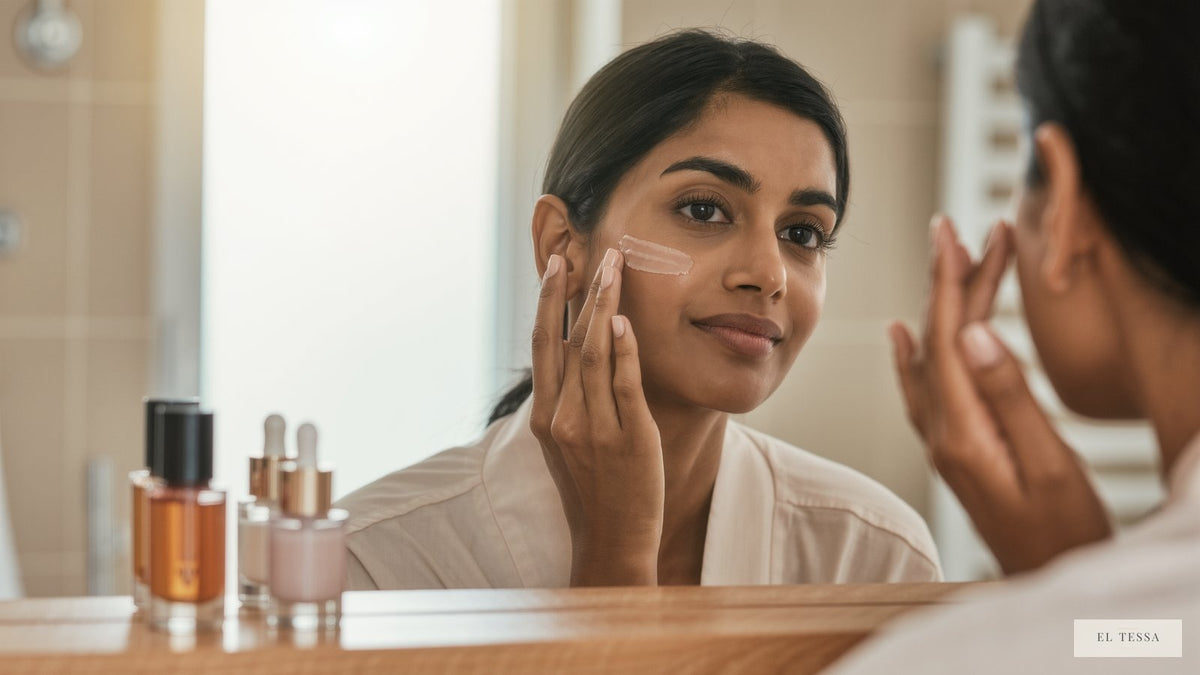
Apply serums thinnest to thickest: a vitamin C serum goes on clean skin in the morning, a glutathione or niacinamide serum can sit in either routine, and retinol goes on at night, never mixed with vitamin C in the same application. Wait about 60 seconds between each one.
What Order Should You Apply Multiple Serums In?
The simplest rule works for almost everyone: water-based and lightest first, thicker or more concentrated treatments after, moisturiser last. In practice, that means:
1. Cleanse.
2. Lightest serum first (usually vitamin C or a watery niacinamide serum).
3. Wait 60 seconds so it absorbs instead of sitting on top of the next product.
4. Heavier serum or treatment next, if you're using a second one.
5. Moisturiser.
6. Sunscreen — mornings only, always last.
If you only remember one thing, remember this: more serums is not automatically better. Our own guide to the correct order of skincare steps walks through where serums, toner, moisturiser and sunscreen each sit in a full morning and night routine, including days when you're using just one treatment step.
Can You Use Vitamin C and Niacinamide Together?
Yes. Older advice said vitamin C and niacinamide fight each other and should never be combined — that came from lab tests done decades ago under conditions (high heat, raw powder forms) that don't reflect how modern, stabilised serums are actually made. Used in properly formulated products, they layer fine.
Apply your Vitamin C Serum first on clean, dry skin in the morning — it works best closest to bare skin — then give it about a minute before following with a niacinamide serum. If you want to understand what niacinamide does on its own and who it suits, our niacinamide serum guide covers it as a standalone step for oily and combination skin. For the vitamin C step itself, our how-to guide for vitamin C serum covers application, timing and what results actually look like.
Where Does a Glutathione Serum Fit Into Your Routine?
This is the one most generic layering guides skip, because glutathione serums are far more common in the Pakistani market than in the US or UK guides most "how to layer serums" articles are written for.
Treat a glutathione-based serum as a night step, not a morning one — it works on evening out tone over time, and like most brightening actives, it doesn't need daylight or sun exposure to do that job. Don't stack it with retinol on the same night when you're starting out; pick one active treatment per evening until your skin has clearly adjusted. Our Glutathione Brightening Serum is built as a single-step night treatment for exactly this reason, and our glutathione serum guide covers how it compares with vitamin C and what a realistic timeline for results looks like.

Why Does Pakistan's Heat and Humidity Change How You Layer Serums?
A five-step serum stack that feels fine in a cool, dry climate can feel heavy, sticky or slow to absorb during a Lahore or Karachi summer. Sweat breaks down how well a product sits on skin, and a thick layer under makeup or sunscreen is more likely to slide off through the day. Two adjustments help:
- In hot, humid months, cut back to your one or two most important serums rather than a full stack, and give each one longer to fully absorb before the next step.
- In cooler, drier months, your skin can usually tolerate the fuller routine — vitamin C in the morning, a treatment serum (niacinamide, glutathione or retinol, never retinol with vitamin C) at night.
This isn't about buying more products for the weather — it's about using fewer, better-timed layers when your skin is already dealing with heat and sweat.
How Many Serums Do You Actually Need?
Here's the honest answer most product pages won't give you: most people do perfectly well with one or two serums, not four or five. A vitamin C serum in the morning and one treatment serum at night — retinol, niacinamide or glutathione, depending on your actual concern — covers most skin goals. Add a third only once your skin has clearly adjusted to the first two and you have a specific, separate problem the extra step is solving.
Layering more actives than your skin can handle doesn't speed up results — it usually just raises the odds of redness, stinging or an active cancelling out before it's had time to work.
What's a Simple AM and PM Serum Routine for Pakistani Skin?
| Time | Step 1 | Wait | Step 2 | Then |
|---|---|---|---|---|
| Morning | Vitamin C serum | ~60 seconds | Niacinamide serum (optional) | Moisturiser, then sunscreen |
| Night | Glutathione or niacinamide serum | ~60 seconds | Night cream or our Night Repair Serum | — |
| Night (separate days) | Retinol, e.g. our Retinol Mushroom Serum | — | Moisturiser | — |
Keep retinol on its own nights, at least to start, rather than stacking it with another active treatment the same evening. Dermatologists quoted by the American Academy of Dermatology recommend applying a retinoid only at night and protecting skin with sunscreen during the day, since it can make skin more sensitive to sun. If you haven't started retinol yet, our beginner's guide to retinol covers how to introduce it slowly without wrecking your skin barrier.
FAQ
Can I use three serums every single day?
You can, but most people don't need to. Build up slowly, and watch for redness, stinging or dryness before adding a third active serum to a daily routine.
Does vitamin C cancel out niacinamide if I layer them?
No, not with modern, properly formulated serums. Wait about a minute between the two so each one has time to settle before the next goes on.
Can I use retinol and vitamin C on the same day?
Yes, but not layered together. Use vitamin C in the morning for antioxidant protection and retinol at night — keeping them at opposite ends of the day avoids irritation and pH conflicts between the two.
Do I need to wait between every serum layer?
A short wait of around 60 seconds per layer is enough for most products to absorb before the next step goes on. You don't need to wait until skin feels completely dry.
Is a glutathione serum safe to use with a vitamin C serum?
Yes, many people use both — vitamin C in the morning and a glutathione serum at night — rather than layering them in the same application.
How this guide was made: drafted with AI assistance from EL TESSA's own product information and the source linked above (American Academy of Dermatology), and fact-checked by the EL TESSA team on 22 October 2026.
Ready to build your routine? Shop the Night Repair Serum and pair it with one morning active for a simple, two-step start.